Dear GP-write Community,
We hope you are all staying healthy and safe during these extraordinary times. We are writing to share a number of exciting advances and developments at Genome Project-write (GPW):
1. The GPW Foundry and Incubator, Base-Pair-Go, is under development and will be the first of its kind focused on genome-scale writing.
1. We are excited to announce that Agilent has joined our Industry Advisory Board, and are working together to build a team of industry leaders. For those in industry, please email if you are interested in joining the Board or wish to learn more.
2. The first opportunity for funding through our GPW Foundry and Incubator seeks to develop a treatment for the debilitating Charcot Marie Tooth Disease Type 4B3 (CMT4B3) through editing/redesign of the gene mutation. $500,000 in direct funds are available for translational research to (i) create a mini gene to minimize its size to fit into an AAV9 vector, while still maintaining the functional components of the gene or (ii) to develop a split AAV and transplicing approach. Please email if you are interested in submitting a grant proposal.
3. The first phase of the GPW Computer Aided Design (CAD) Platform will be developed this year. If you are interested in sponsoring specific design features or elements please email for additional details.
2. We are pleased to announce Dr. Junbiao Dai and Dr. Farren Isaacs as the new Co-chairs of the GP-write Scientific Executive Committee. Please contact Junbiao and Farren if you wish to participate in the GPW community project or help launch new GPW projects.
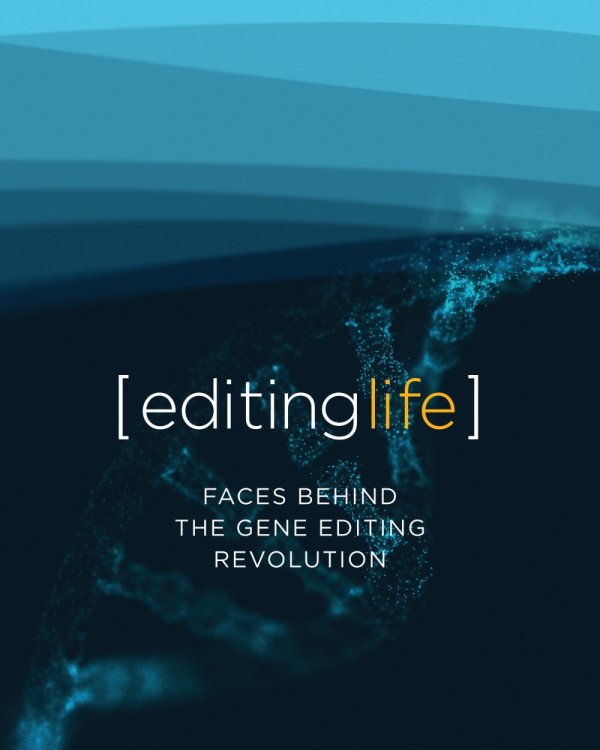
3. Cellectis has released a book entitled “Editing Life: Faces Behind the Gene Editing Revolution”, which features interviews from well-known scientists, coined as the “founding parents” of gene editing including: Drs. George Church, André Choulika, Matthew Porteus, and many others. This book explains how gene editing began, where we are today and where we’re headed in the future. Most importantly, the book discusses how gene editing has emerged as one of the most promising tools in clinical development, with the potential to save lives and advance the future trajectory of global medicine. Proceeds of the sale are being generously donated to GP-write and can be purchased at: https://www.amazon.com/dp/B08JCYLTLC
Our next in-person/virtual meeting will be hosted by SIAT in Shenzhen, China on October 23-24, 2021, immediately preceding the Cold Spring Harbor Asia Conference in Synthetic Biology, which will be held on Oct 25-29, 2021. Please mark your calendars!
Wishing you an Ultra-safe Holiday Season and a virus-free New Year!
The Leadership Team,
George Church, Andrew Hessel, Farren Isaacs, Todd Peterson and Amy Schwartz
To the GP-write community,
As 2018 comes to a close, we write to wish you and your families a safe and happy holiday season!
2019 GP-write meeting Hold the Date
The 2019 GP-write meeting will be held at NYU November 11-14 in conjunction with the Sc2.0 meeting. More details will be announced soon.

A Productive Year
It was a quiet, productive year for GP-write. As a community, we have many accomplishments to be proud of. GPW was the subject of numerous high-profile articles, including WIRED magazine, NEO.LIFE, Chemistry World, and BioTechniques. We held a very successful meeting in May at Harvard Medical School, in which the nine working groups presented their roadmaps and group charters. A community-wide project to make “ultra-safe” virus-proof cells was also announced. See here for a recently posted community wide project coordination discussion on the GP-Write International Consortium Roadmap, hosted by George Church. The meeting was favorably covered by the science and mainstream media, including articles in Science, Nature, Time, STAT, Forbes, and MIT Technology Review. We announced the formation of an industry advisory group, and announced agreements with several industry partners to enable cutting-edge research for GPW affiliates. Congratulations to all on a productive and stimulating year of science!

GP-write is Timely and Relevant
Looking at the themes that are emerging in the scientific literature and mainstream press, GPW appears more timely than ever. Technologies for reading, designing, and writing DNA are advancing at an ever more rapid pace, fueling breakthrough science and industry growth. The recent news of human germline editing of DNA with CRISPR technology has brought the massive technical and ethical issues out of academia discussion and into public consciousness. GPW is positioned to help people better understand these technologies and to facilitate discussions about upcoming scientific and technological advances that are less a matter of if but when.

Looking ahead
Synthetic biology is booming. Academic grant funding is flowing. Biodefense and biosecurity interest and investment is growing. Industry hub Synbiobeta estimates that over $3B will have poured into startups this year — almost double the 2017 amount. Twist Biosciences, Moderna, Synthorx and others have had successful IPOs. Meanwhile, multiple enzyme-based synthesis companies have appeared and are working to bring “next-gen” DNA synthesis online. Entire countries (we’re looking at you, Canada) are organizing to join the GPW effort. GP-write has grown a lot since it launched in 2016. Expect to see organizational changes in 2019 to better support the community and its continued expansion and evolution.

Thanks to each of you for your efforts these last few years – they are significant and they have not been recognized or rewarded enough. We also want to thank our generous sponsors. Enjoy the holiday season, and we look forward to working with you in 2019!
Best,
Everyone at GP-write HQ

GP-write Scientific Working Meeting was held at the Joseph P Martin Conference Center at Harvard Medical School in Boston, MA.
Since the May, 2017 meeting, the following nine working groups have been working hard on their charters, roadmaps and white papers and the Scientific Executive Committee has identified the first lead project for GP-write which was discussed at the May meeting.
- Scientific Executive Committee
- Ethical, Legal and Social Advisory Board/Policy
- Technology and Infrastructure Development
- High Performance Computing and Data Infrastructure
- Safety Engineering
- Standards, Quality Control and Reporting
- Intellectual Property
- Communications and Public Outreach
- Education
The aim of the meeting was to further advance the goals of GP-write, which are to understand the blueprint of life, to reduce the cost of engineering and testing large genomes in cell lines, and to develop new tools and technologies for engineering biology. This was a Scientific Working Meeting where each of the working groups reported on their progress, and break-out sessions were held to discuss areas of overlap between groups and enable open discussion and synergy.
The meeting concluded with an evening reception.
A press briefing was also held after the meeting to summarize proceedings and next steps for the project.
[vls_gf_album id=”91″]
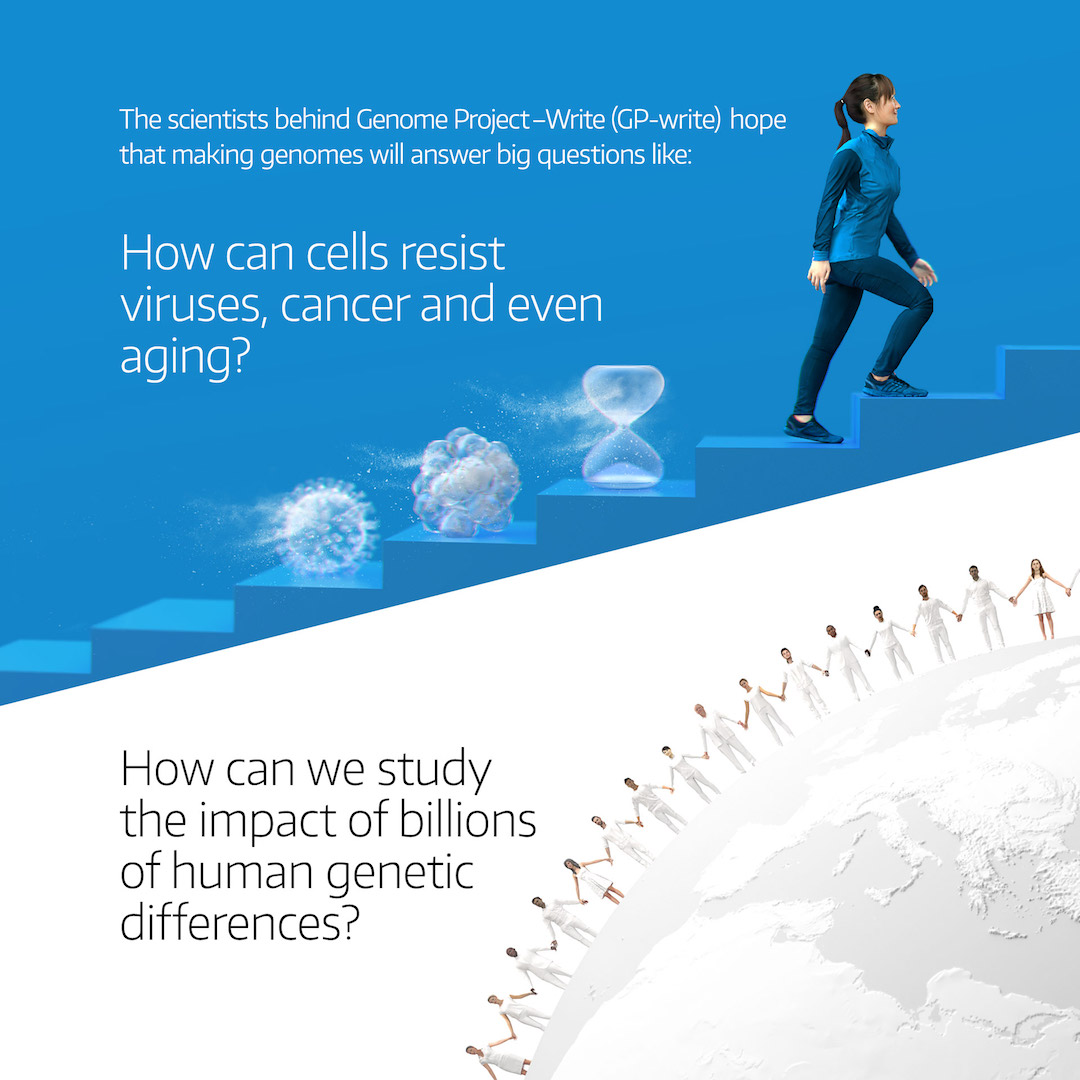
 The leadership of Genome Project-write (GP-write), a project that follows on to the Human Genome Project and involves some 200 scientists from more than 100 institutions in 15 countries, proposes to move from passively reading genomes to actively writing them [1]. At the May 2018 Scientific Working Meeting, GP-write organizers will announce the first community-wide project: “ultra-safe” versions of human cells that resist natural viruses, and potentially radiation, freezing, aging, and cancer.
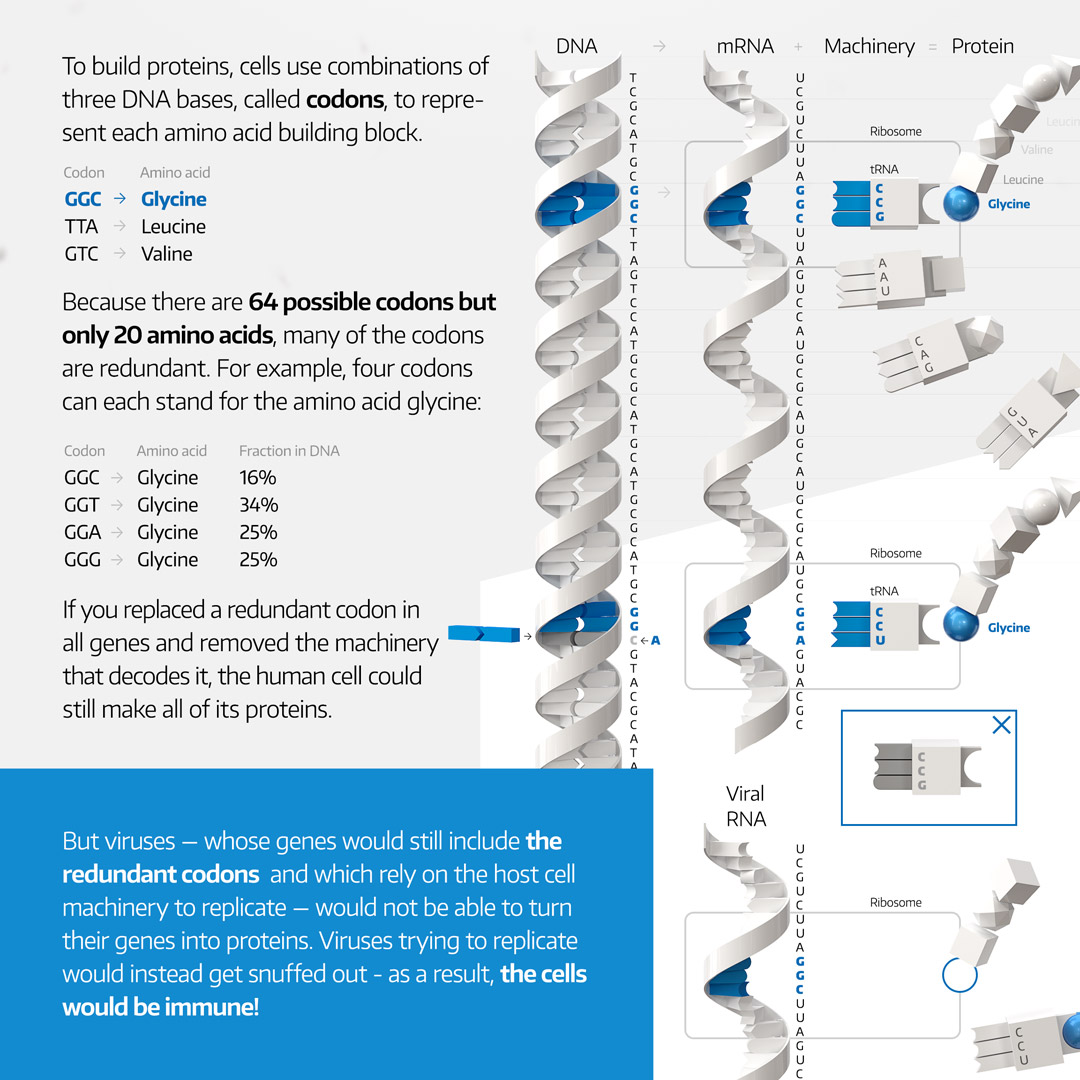
 Cells may be rendered virus-proof using a process called recoding. To build proteins, cells use combinations of three DNA bases, called codons, to represent each amino acid building block. For example, the triplet ‘GGC’ represents the amino acid glycine, TTA represents leucine, GTC represents valine, etc. Because there are 64 possible codons but only 20 amino acids, many of the codons are redundant. For example, four codons can each stand for glycine: GGT, GGC, GGA, and GGG.
 If you replaced a redundant codon in all genes (or ‘recode’ the genes) and removed the tRNA machinery that decodes it, the human cell could still make all of its proteins. But viruses – whose genes would still include the redundant codons and which rely on the host cell machinery to replicate – would not be able to translate their genes into proteins. Viruses trying to replicate would instead get snuffed out – as a result, the recoded cells would be immune.
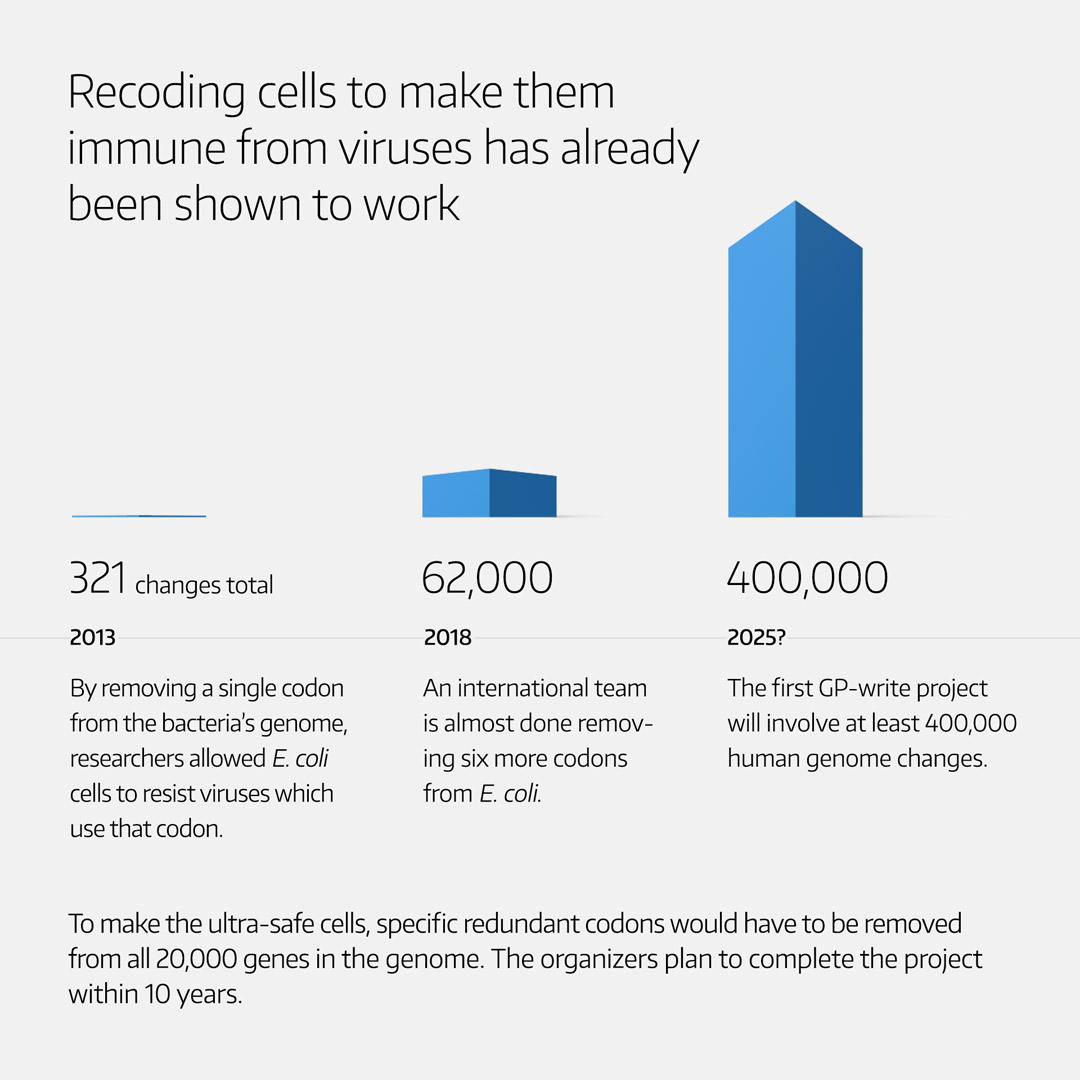
 The concept of recoding for viral resistance has already been demonstrated. In 2013, Lajoie and colleagues reported in Science that, by removing all 321 instances of a single codon from the E. coli genome, they could impart resistance to viruses which use that codon.1 An international team, including the lab of professor George Church (founding core faculty member, Wyss Institute at Harvard University and professor of Genetics, Harvard Medical School), is finishing the removal of six more codons from the E. coli genome, requiring a further 62,000 changes [2]. In comparison, the GP-write proposal of an ultra-safe cell line would require at least 400,000 changes to the human genome. Specific redundant codons would have to be removed from all 20,000 human genes. The GP-write organizers hope to complete their work within 10 years.
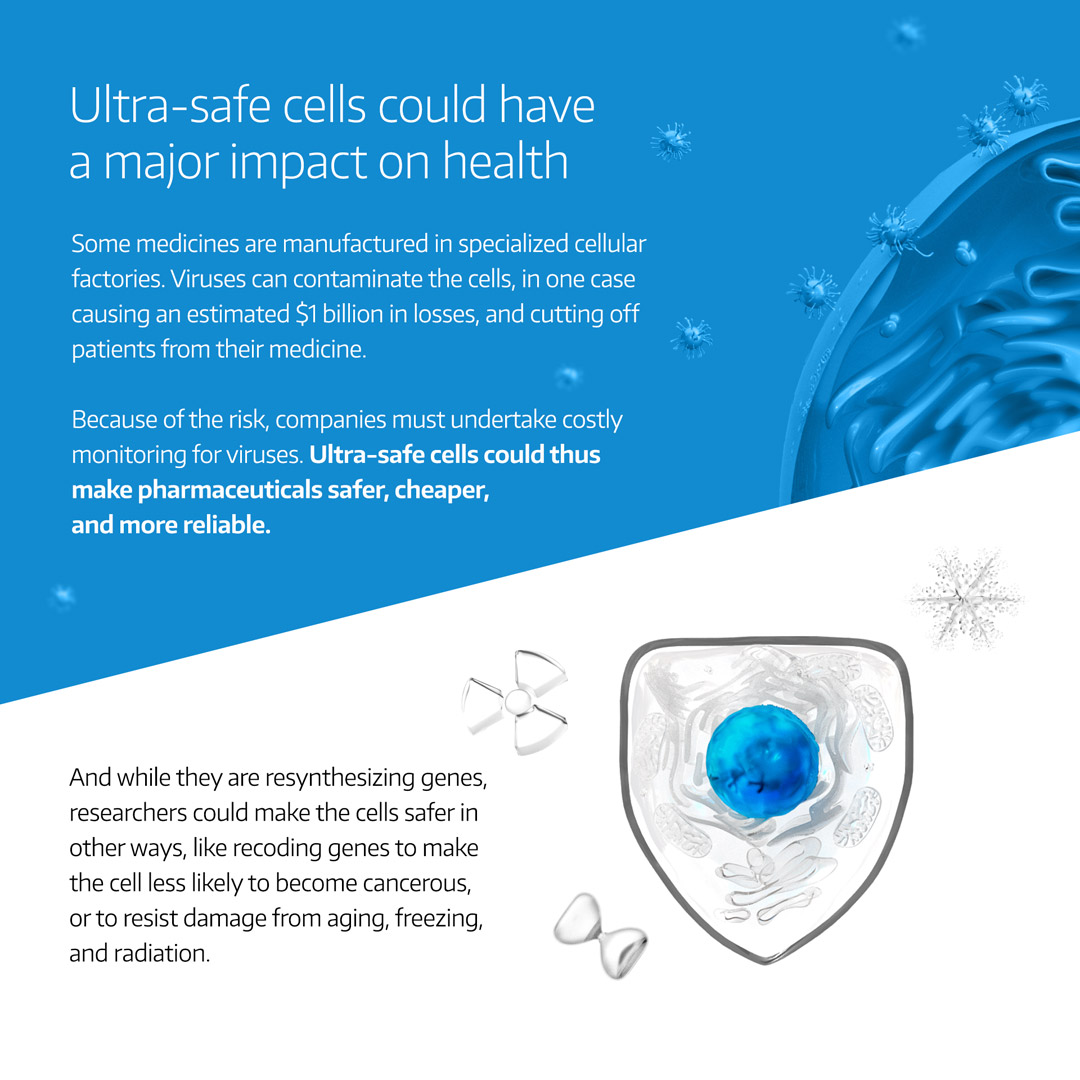
 Ultra-safe cells could have a major impact on human health. For example, some medicines are manufactured in specialized cellular factories. Viruses can contaminate the cells, in one case causing an estimated $1 billion in losses, and cutting off patients from their medicine [3]. Because of the risk, companies must undertake costly monitoring for viruses. Ultra-safe cells could thus make pharmaceuticals safer, cheaper, and more reliable. And while they are resynthesizing genes, researchers could make the cells safer in other ways, like recoding genes to make the cell less likely to become cancerous, or to resist damage from aging, freezing, and radiation.
 Recoding human cells will require significant improvements to technology for synthesizing and testing artificial genomes. In gene synthesis, DNA nucleotides are biochemically stitched together one at a time. The result is similar to natural DNA, but the process is currently very slow. By driving innovation and increasing demand, GP-write hopes to make this process faster and cheaper. After synthesis, the DNA can be assembled into genes or entire chromosomes, and then tested in living cells. GP-write scientists will also work to improve the tools for genome assembly and testing, but in some cases, the technology doesn’t exist yet [4].
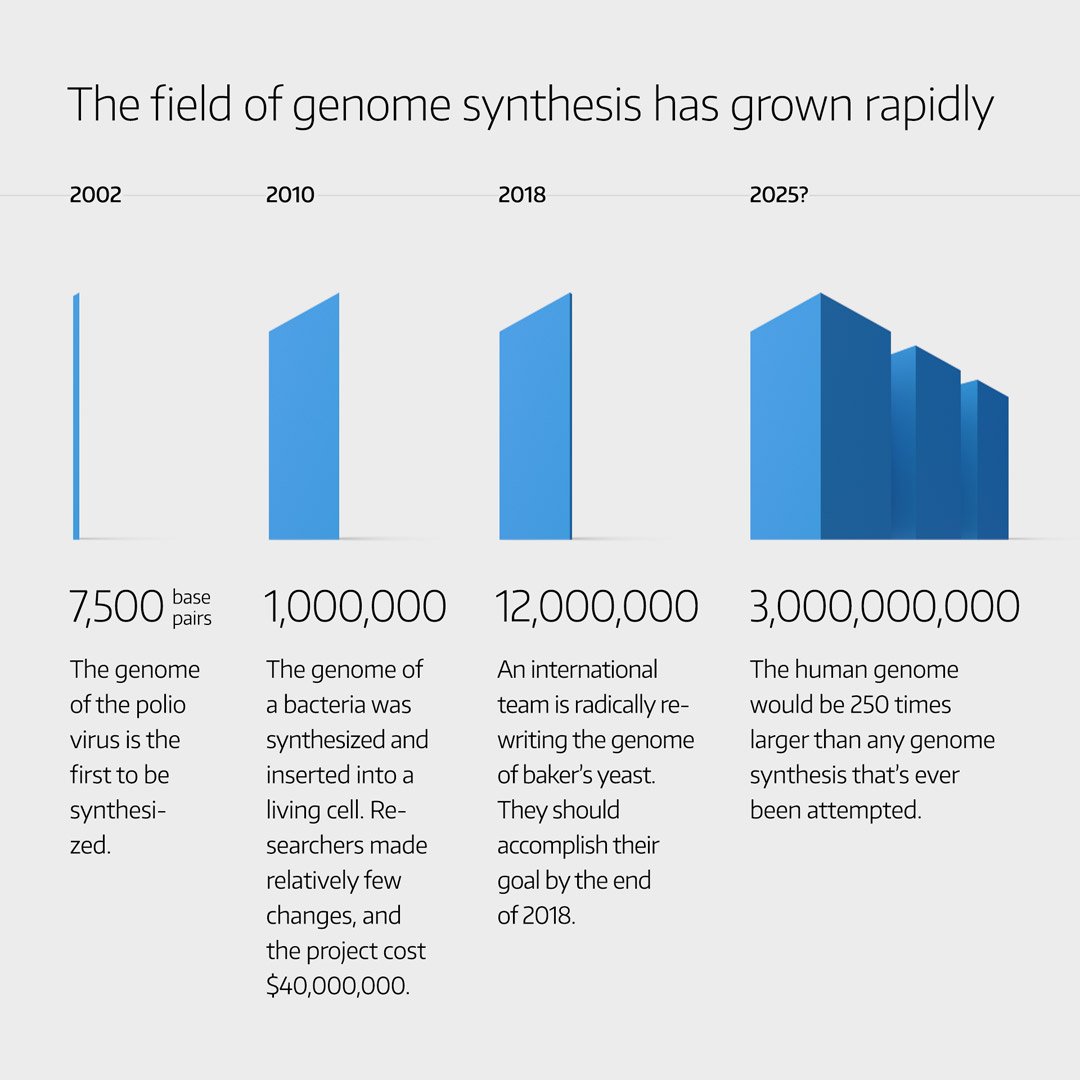
 The ultra-safe cell project will be modeled in part on the success of the Sc2.0 project, led by professor Jef Boeke, Ph.D., director, Institute for Systems Genetics, Department of Biochemistry and Molecular Pharmacology, NYU Langone Medical Center. This year the participants aim to complete the radical rewriting of the 12-million base-pair genome of baker’s yeast. In comparison, the human genome has 3 billion base pairs in one set of chromosomes.
The organizers of GP-write believe in proceeding transparently and responsibly. They have sought feedback from bioethicists, policy experts, journalists, and the public. GP-write is coordinated by the Center of Excellence for Engineering Biology. The project can be followed at EngineeringBiologyCenter.org.

[1] “GENOME ENGINEERING. The Genome Project-Write.” Boeke JD, Church G, Hessel A, Kelley NJ, Arkin A, Cai Y, Carlson R, Chakravarti A, Cornish VW, Holt L, Isaacs FJ, Kuiken T, Lajoie M, Lessor T, Lunshof J, Maurano MT, Mitchell LA, Rine J, Rosser S, Sanjana NE, Silver PA, Valle D, Wang H, Way JC, Yang L.Science. 2016 Jul 8; 353(6295): 126-7. doi: 10.1126/science.aaf6850. Epub 2016 Jun 2. PMID: 27256881
[2] “Design, Synthesis, and Testing Toward a 57-codon Genome.” Nili Ostrov 1, Matthieu Landon 2, Marc Guell 3, Gleb Kuznetsov 4, Jun Teramoto 5, Natalie Cervantes 1, Minerva Zhou 6, Kerry Singh 6, Michael G Napolitano 7, Mark Moosburner 1, Ellen Shrock 1, Benjamin W Pruitt 8, Nicholas Conway 8, Daniel B Goodman 3, Cameron L Gardner 1, Gary Tyree 1, Alexandra Gonzales 1, Barry L Wanner 9, Julie E Norville 1, Marc J Lajoie 10, George M Church 11. PMID: 27540174. DOI: 10.1126/science.aaf3639
[3] “Genomically Recoded Organisms Expand Biological Functions.” Mark J. Lajoie, et al. Science, October 18, 2013.
[4] “
Synthetic genome recoding: new genetic codes for new features.” Kuo J, Stirling F, Lau YH, Shulgina Y, Way JC, Silver PA. Curr Genet. 2018 Apr;64(2):327-333. doi: 10.1007/s00294-017-0754-z. Epub 2017 Oct 5. PMID: 28983660
Since the initial meeting on October 31st, 2015 in New York City, GP-write has made significant progress advancing the agenda of this Grand Challenge. We have expanded to 200 Consortium members, convened for two annual meetings, introduced 26 pilot projects, and formed 10 working groups that are now meeting at least monthly. It’s been a very busy two years!
So busy, in fact, that we decided to capture some of the progress made by the numbers:
GP-write by the Numbers
250: Number of attendees at 2017 May meeting
232: Number of dollars, in millions, in GP-write-related funding that has been received across multiple institutions (as of May 2017)
200: Number of international scientists represented in Consortium
107: Number of working group committee members
106: Number of institutions represented in Consortium
100: Percent of attendees polled at May meeting who believe the time is right for a Grand Challenge such as GP-write
70: Number of presentation videos available for viewing from the 2017 May meeting
14: Number of countries represented in Consortium
13: Number of approved pilot projects
13: Number of pilot projects under review by scientific executive committee
10: Number of active working groups
10: Number of partners and sponsors for the 2017 May meeting
4: Number of official GP-write publications
3: Number of pilot projects lead/proposed by a citizen scientist
1: International community taking on this Grand Challenge!
We encourage you to explore the GP-write website, which has been updated to reflect these and many other updates, including publication of the 2017 May Meeting Summary, as well as poll results, presentation videos, photos, and representative media coverage of the May meeting.
We also encourage you to check back frequently for updates from each of the working groups as they are in the midst of creating charters and roadmaps that will be published on the website, new pilot project proposals and approvals, upcoming events, new blog posts, and ongoing GP-write media coverage.
If you would like to propose a pilot project or join a working group, please contact us at info@engineeringbiologycenter.org. You can also help to fund the project with a tax-exempt donation by clicking on the DONATE button at the top or bottom of any website page at www.engineeringbiology.org.
We are excited to continue on this incredible journey, which we hope will contribute to solving many of our most pressing global challenges!
The second GP-write annual meeting was held on May 9th and 10th, 2017, at the New York Genome Center in New York City. This meeting explored the concrete steps that GP-write can take to solve some of the most important problems facing humanity, including how to move from a carbon-based economy towards a biological one that is sustainable? How to further advance cures for disease? How to responsibly communicate the risks and benefits of this project to the world? The Agenda also included the introduction of new pilot project proposals, as well as the commencement of GP-write working groups to discuss project roadmaps, including scientific direction, technology development, ethical, social and legal engagement, standards and infrastructure development, amongst others.
There were more than 250 attendees from 10 countries at this oversubscribed meeting. The meeting participants were academic and industry scientists, ethicists, lawyers, educators, citizen scientists, artists, policymakers, technologists and lay people. This meeting also attracted a great deal of interest from the press, many of whom were on-site throughout the meeting to attend a press briefing as well as a tour of the genome foundry at the Institute for Systems Genetics at NYU Langone Health.
[vls_gf_album id=”1″]
Jef Boeke on the process of analyzing yeast colonies used to assemble chromosomes in the GenomeFoundry at NYU Langone Center.
If anyone understands the challenges associated with powering a eukaryotic cell with a designer genome built from scratch, it’s Leslie Mitchell, a postdoc in Jef Boeke’s lab at NYU. Mitchell has been leading experimental design and technological development for the Synthetic Yeast Genome Project (Sc2.0) since 2012. In this role, she collaborates with Sc2.0 International Consortium team members spanning 4 continents to provide remote mentorship and solve challenges associated with synthetic chromosome design features and assembly.
The goal of Sc2.0 is to design, build, assemble, and test the function of an entirely synthetic designer yeast genome. Earlier this month, the Sc2.0 International Consortium announced the completed design of the Sc2.0 genome, construction of five new synthetic chromosomes, and described the 3D organization of synthetic chromosomes in the nucleus, all of which earned them the March 10 cover story for Science. To date, 30% of the Sc2.0 genome has been constructed in cells, and the team hopes to have the entire genome – all 16 chromosomes – completed before the end of 2017.
According to Mitchell, the genome engineering effort of Sc2.0 can offer some powerful lessons for GP-write, both from an organizational and technical perspective.
Organizational Insights
A well defined plan should be in place at the launch of the project, which all participants must agree upon, including funding, space, personnel, QA/standards, material transfers, publication policy, intellectual property, software, ownership of the project, training and education, and compliance with local laws. Additionally, because GP-write will involve global participation similar to Sc2.0, it will be important to maintain a collaborative and inclusive culture across international borders.
One organizational feature that has driven success of Sc2.0 is the distributive nature of the project. While Sc2.0 chromosome design is centralized, involving a close collaboration between yeast geneticists of Jef Boeke’s lab and computational biologists from Joel Bader’s lab at Johns Hopkins University, synthesis and assembly are parallelized between teams around the world. Not only does this partition the workload associated with chromosome assembly, it also distributes the financial burden as each team is responsible for obtaining their own funding.
Technical Insights
Following a common design standard has been a key strategy for Sc2.0. All design features that are written into Sc2.0 chromosomes adhere to a set of overarching design principles, the goals of which are to direct growth to wild-type levels while simultaneously increasing genome flexibility and stability.
Another lesson learned from Sc2.0 is to take on a piece-by-piece assembly strategy. Such a strategy is practical in that it’s much easier to manipulate smaller segments of DNA in vitro, for example 30-60 kb segmented into 10 kb ‘chunks’. More importantly, this strategy allows the team to evaluate synthetic DNA function in cells along the way and quickly back track to any design features that negatively impact cell fitness. For the Sc2.0 project it is now clear that despite densely spaced clusters of edits (mean distance of ~400bp), the overall design is robust as few ‘bugs’, or designer changes that affect cell fitness, have been uncovered.
Sc2.0 has also highlighted limitations of gene synthesis and how these limitations may impact our ability to design and build synthetic genomes. While cost is a much-discussed issue associated with gene synthesis, a less publicized problem is that not all sequences can be easily synthesized de novo. It all comes down to sequence composition. For instance ‘low complexity DNA’ such as homopolymer runs and regions with extreme GC or AT richness can be particularly difficult to synthesize. Of course with enough time, money and effort most DNA sequences can eventually be built; de novo designed mammalian genome-scale synthesis however will require a drop in cost by orders of magnitude together with technology improvements to enable DNA synthesis without restrictions on sequence composition.
DNA delivery is another area ripe for technology development for GP-write. Yeast cells are easily transformed and incorporate DNA into their genome readily using their natural capacity for homologous recombination. Together these features have enabled an efficient Sc2.0 DNA delivery strategy encompassing segments of 30-60kb of designer DNA. The Sc2.0 strategy can applied on some level for GP-write, but there will be delivery challenges that will need to be addressed as we move into mammalian systems, in particular with respect to the delivery of increasingly large segments of designer DNA for targeted delivery.
An additional challenge that GP-write will face with respect to building artificial mammalian chromosomes is centromere engineering. Unlike budding yeast point centromeres, which are ~125 bp and easy to synthesize, mammalian centromeres are composed of megabases of highly repetitive sequences. Mitchell and her colleagues are currently trying to overcome this engineering challenge with the goal of building mammalian artificial chromosomes that will be stable over many generations of cells. Centromere engineering strategies starting from the ‘top-down’, by minimizing native chromosomes, as well as from the ‘bottom-up’, via de novo establishment of centromere function, will both be important to pursue.
With encoded features that enable genetic flexibility and increased genomic stability, Sc2.0 will be a designer genome with new capabilities. As a result, we will soon be able to ask new biological questions – about evolution, minimal genome sequences that support viability under different conditions, and the requirement of specific genomic features such as repeats and introns. Completion of Sc2.0 will represent a major stepping-stone for GP-write, which will build on the knowledge and technological advances of this project.
We invite you to join Mitchell and her colleagues at the next GP-write meeting on May 9-10th, 2017, which will be held at the New York Genome Center. Mitchell will be speaking on the topic of Genome Engineering Foundries at 11:30 am on May 10th. View the agenda.
Registration is limited to 250 in-person attendees on a first-come, first-served basis so don’t forget to register today! We look forward to seeing you there!
Welcome to the official blog of GP-write!
Through this blog, we will not only provide you with project updates, but will invite you to engage with us to consider all aspects of this Grand Challenge.
What global challenges should this project address to advance humanity? What technological limitations do we need to overcome? Who owns a synthetic genome? Will GP-write widen inequality – or help to address it? These are just a few of the hard questions that we would like to delve into further with you in 2017.
But more importantly, we want to hear from you.
If there is a specific topic that you would like us to cover, please provide your feedback in the comments at the bottom of this post, or contact us here. In addition, from time to time, we will feature guest blogs from interested parties in the GP-write community. Please let us know if you have a burning desire to share your thoughts on a topic of interest to the project.
Name This Blog!
The first topic we would like you to think about and provide us some input on is the name of this blog. We invite all members of the GP-write community to submit suggestions for a blog name in March at info@engineeringbiologycenter.org. The official name will be announced on our next blog update in April. We can’t wait to hear your suggestions!
GP-write Updates
GP-write has attracted a great deal of thought and interest, particularly after the May 10th meeting in 2016 (meeting summary), the online publication of a Commentary in Science, and the issuance of a press release. Representative coverage of the meeting and Commentary can be found here on the project’s website. Videos from the meeting can be viewed here. The project has also gained significant momentum since last year, and we have quite a few updates to share with you below.
Expanded Project Scope
Over the past six months, the Leadership team has been hard at work responding to comments from the press and scientists around the world. In large part due to these conversations, the project’s name has been changed from HGP-write to GP-write, and its scope expanded. The project will focus on using synthesis and genome editing technologies to understand, engineer and test living systems of model organisms, including the human genome, and plants in cell lines. The goal of GP-write is to not only deepen our understanding of life but to develop pragmatic technology of general use in biology, improving the cost and quality of DNA synthesis, DNA assembly in cells, and testing of many DNA variations on tissue characteristics. These updated project details can be found in detail in the GP-write White Paper. Please note that the White Paper is a “living document” which will be continuously revised as more comments are received, new developments occur and pilot projects are suggested.
An International Effort
To date, nearly 200 scientists from over 100 institutions/companies in 15 countries have expressed interest in participating in GP-write (view here); moreover, several countries have expressed a willingness to provide financial support for the project. Nature has cited Jef Boeke and HGP-write as a “project to watch” in 2017: http://www.nature.com/news/nature-s-10-1.21157. Scroll to the bottom of the article for “Ones to Watch in 2017”.
May 2017 GP-write Meeting
We hope you can join us at the next meeting for GP-write, which will be held on May 9th and 10th, 2017, at the New York Genome Center in New York City. You can find out more about the meeting here. You can register here. The Agenda and speakers will be posted in early March, but will include discussions about roadmaps for the project, including scientific direction, technology development, ethical, social and legal engagement, standards and infrastructure development, amongst others. Scientific topics will include, among other things, the introduction and discussion of new Pilot Projects and the creation of an Industry Consortium. Specific meetings will also be organized around a press briefing and funding.
All meeting updates can be found here. For those unable to attend the meeting in person, we are seeking webcasting options. Please refer to our website for updates on this option.
Working Groups
A series of working groups are being formed, the goal of which is to create roadmaps for a number of important topics surrounding GP-write. Working groups are being formed around the following topics:
- Scientific Roadmap
- Ethical, legal and social implications
- Technology development
- Infrastructure development
- Safety engineering
- Standards
- Intellectual property
- Communications and public outreach
- Policy development
We will provide regular status updates for each working group on the project’s website. We also expect to provide initial status updates at the May meeting.
Thank you for your interest in this Grand Challenge Project! We are excited to begin on this journey, which we hope will contribute to solving many of our most pressing global challenges!
We are pleased with the great showing of interest and support for our upcoming meeting on May 9-10th, at the New York Genome Center. With mounting enthusiasm for the meeting now on the horizon, we are posting an update with the most recent developments.
The agenda is now online, and includes scientific talks, discussions about roadmaps for GP-write including scientific direction, technology development, ethical, social and legal engagement, standards and infrastructure development amongst others. Specific meetings will be organized around a press briefing and funding. The agenda (click here to view) identifies invited and confirmed speakers and their affiliations, and provides detail regarding the panels and their content.
At the meeting, we will be using the event App, Attendify, to stimulate conversation and discussion amongst attendees and the community in response to presentations or panels. Attendify will also enable great promotional opportunities for our sponsors. Many thanks to those of you who have expressed an interest in sponsoring GP-write. If you are interested in becoming a sponsor, please let us know as soon as possible!
Finally, we invite you to submit Abstracts for additional GP-write pilot projects by the end of April. At the May meeting, scientists whose pilots have been selected will have the opportunity to give a 3-5 minute “elevator pitch” to the community to present their ideas.
We look forward to seeing all of you very soon.
Learn More and Register for the Meeting